CHAPTER 1: THE WORD MY MOTHER COULDN’T SAY
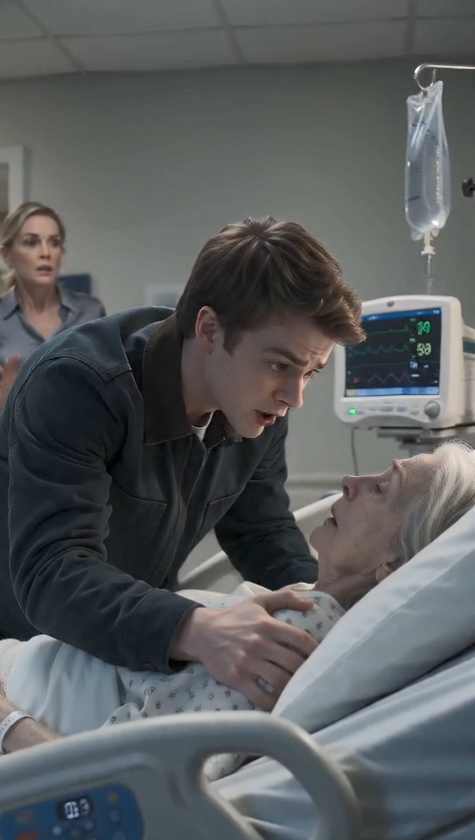
The first nurse arrived less than thirty seconds after I pulled the pillow away.
Her name was Angela. I remembered because she had been kind to my mother the night before, adjusting her blankets and calling her “Miss Eleanor” in a warm Southern voice.
The second she saw the broken coffee cup, my mother gasping, and Marissa backed against the wall, Angela hit the emergency button.
“What happened?”
“She was suffocating her,” I said.
Marissa stared at me. “That is not what happened.”
“I saw you.”
“Your mother couldn’t breathe. I was trying to reposition her.”
“With a pillow over her face?”
Two orderlies rushed into the room. A doctor followed them, then hospital security.
Everything happened at once.
They placed an oxygen mask over my mother’s mouth. Someone pulled me away from the bed. A security officer moved between Marissa and me while she continued insisting that I had misunderstood.
She never cried.
That bothered me almost as much as what I had seen.
Marissa could cry over a canceled dinner reservation. She could cry when she felt ignored, when she wanted an apology, or when she needed me to feel guilty.
But standing in a hospital room after nearly killing my mother, she was perfectly composed.
Then she looked at the security officer and said, “My husband has been under a lot of pressure. His company collapsed, and he hasn’t been sleeping. He may not be seeing things clearly.”
I almost lunged at her.
“She had the pillow over my mother’s face!”
The officer raised one hand. “Sir, step back.”
Angela escorted Marissa into the hallway while the doctor examined my mother.
I remained beside the bed, holding Eleanor’s cold hand.
Her eyes moved toward mine.
“Mom, did she hurt you?”
Her fingers tightened weakly around my hand.
“Did Marissa put that pillow over your face?”
A tear slid into my mother’s gray hair.
She tried to speak, but only a dry sound came out.
The doctor leaned closer. “Don’t force it, Mrs. Hail.”
My mother ignored him.
Her lips moved again.
I bent until my ear was almost against her mouth.
“Basement,” she whispered.
I froze.
“What?”
Her eyes widened with urgency.
“Basement.”
Then the heart monitor began beeping faster.
The doctor pushed me aside as nurses surrounded her.
I was forced into the hallway, where two police officers had arrived.
Marissa stood near the nurses’ station with her arms folded across her chest. She looked small and vulnerable beneath the fluorescent lights.
She had already changed her strategy.
“I love Eleanor,” she told the officers. “I would never hurt her. She began coughing, and I panicked. Daniel walked in at the worst possible moment.”
The sound of my own name in her mouth made me sick.
One officer questioned me while the other spoke with hospital staff.
I explained exactly what I had seen.
The pillow.
My mother’s hand moving beneath the blanket.
Marissa pressing down with both arms.
“Were there cameras inside the room?” I asked.
The officer shook his head. “Only in the hall.”
The hallway camera showed Marissa entering room 218 twelve minutes before me. No one else had entered until I opened the door.
It proved she had been alone with my mother.
It did not prove what she had done inside.
Marissa was not arrested.
The officers told her to leave the hospital while they investigated. A security guard escorted her to the elevator.
Before the doors closed, she looked directly at me.
There was no fear in her expression.
Only warning.
Twenty minutes later, the doctor came out of my mother’s room holding a medical chart.
“Your mother is stable,” he said. “But we found something concerning.”
He explained that my mother had been admitted for weakness, dizziness, confusion, and an irregular heartbeat. The symptoms had originally been blamed on dehydration and stress.
Now her blood work showed unusually high levels of a sedative that had never been prescribed to her.
“How long has it been in her system?”
“It’s difficult to say. Possibly weeks.”
The hallway seemed to tilt.
My mother had been getting weaker for months.
She had fallen twice.
She had stopped eating.
Sometimes she could not remember conversations we had had the day before.
I had blamed her age.
Marissa had blamed her stubbornness.
The doctor lowered his voice.
“There’s something else. We found bruising near her jaw and wrists. Some of it is older.”
I thought about all the mornings when my mother had worn long sleeves in warm weather.
All the times she had flinched when Marissa entered a room.
All the moments I had failed to understand.
I returned to my mother’s bedside after she stabilized.
Her eyes were closed, but she was awake.
“Mom,” I whispered, “what’s in the basement?”
Her eyelids opened.
This time, she did not try to speak.
Instead, she lifted one trembling hand and traced three letters against my palm.
B.
L.
U.
Blue.
There was only one blue object in my mother’s basement.
May you like


An old metal trunk that had belonged to my father.
And Marissa had asked me to throw it away three times.