CHAPTER 4 LEARNING WHAT SAFE MEANT
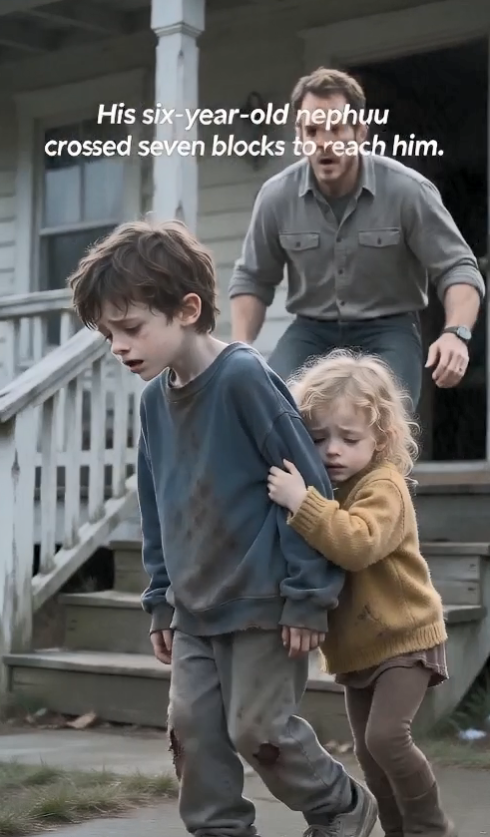
Healing did not happen all at once.
It happened in ordinary moments.
Lily learning that breakfast came every morning, even when she spilled her milk.
Drew discovering that asking a question did not lead to punishment.
Both children realizing that the refrigerator could be opened without permission.
Peter kept bowls of fruit on the counter.
He filled a low cabinet with crackers, cereal bars, and juice boxes.
The first week, the food disappeared almost immediately.
He found granola bars beneath mattresses.
Crackers inside shoes.
An apple hidden behind the bathroom towels.
Peter never scolded them.
He simply replaced everything.
One evening, Drew caught him putting fresh snacks into the cabinet.
“You know we took the others?”
“I know.”
“Are you mad?”
“No.”
“But we hid them.”
Peter sat on the kitchen floor beside him.
“You hid food because there was a time when you didn’t know when you would eat again.”
Drew looked down.
“That time is over.”
“What if the food runs out?”
“I’ll buy more.”
“What if you don’t have money?”
“I’ll figure it out.”
“What if I do something bad?”
“You will still eat.”
Drew’s eyes lifted.
“Even if I lie?”
“Yes.”
“Even if I break something?”
“Yes.”
“Even if you’re really mad?”
Peter leaned forward.
“Food is not something you have to earn.”
Drew stared at him for a long moment.
Then he opened the cabinet, took out one cracker, and ate it at the kitchen table.
He left the rest behind.
Three weeks later, doctors removed Drew’s first cast and replaced it with a lighter one.
He began physical therapy.
The first session ended after twelve minutes.
Drew refused to stand between the parallel bars.
The therapist did not force him.
Peter waited beside the wall.
“You carried Lily seven blocks,” he said quietly. “You don’t have to prove you’re strong anymore.”
Drew gripped the bars.
“What do I have to prove?”
“Nothing.”
That answer seemed to confuse him.
Children who grow up afraid often believe every good thing must be earned.
Safety.
Food.
Attention.
Love.
Drew had spent three years trying to be useful enough to keep Lily safe.
Now he had to learn how to be six.
He took one step.
Then another.
By the end of the month, he could cross the therapy room with support.
Lily clapped every time as though he had won a championship.
Meanwhile, the criminal case moved forward.
Reena and Clay were charged with multiple offenses related to child endangerment, unlawful confinement, financial exploitation, and evidence tampering.
Clay tried to blame Reena.
Reena tried to blame Clay.
The recordings blamed them both.
Nina warned Peter that the defense might request testimony from Drew.
Peter refused immediately.
“He’s already said enough.”
“The prosecutor agrees,” Nina said. “The video evidence is extensive. But Drew may be allowed to submit a written statement later.”
“He’s six.”
“I know.”
“He shouldn’t have to explain why adults should have protected him.”
“No,” Nina said. “He shouldn’t.”
The case might have ended with plea agreements.
But Reena rejected the prosecutor’s first offer.
She continued insisting the basement room had been used only for discipline and that the children’s medical conditions were exaggerated.
Then investigators discovered one final piece of evidence.
An audio message sent by Reena the night before the children escaped.
Her voice was calm.
“If Drew keeps asking for his uncle, I’m moving them somewhere no one will find them.”
Peter listened to the recording once.
Only once.
The prosecution added another charge related to attempted concealment.
Reena accepted the agreement three days later.
At the sentencing hearing, Peter sat behind the prosecutor.
Drew and Lily remained at home with Grace.
Peter had told Drew he did not have to attend.
The boy had looked relieved.
Then ashamed of being relieved.
Peter corrected him immediately.
“You survived it,” he said. “You do not have to sit in the same room with her to prove anything.”
Reena stood before the judge.
For the first time, she apologized.
Not to Drew.
Not to Lily.
To the court.
She said she had been under pressure.
She said she had lacked support.
She said grief had changed her.
Peter listened without expression.
Grief had changed him too.
It had made him quieter.
More cautious.
Too willing to believe that leaving people alone was a form of kindness.
But grief had never made him lock a child behind a door.
The judge sentenced Reena according to the agreement and ordered full restitution of the children’s stolen funds.
Clay received a separate sentence.
Neither would have contact with Drew or Lily.
When Peter returned home, Drew was waiting on the porch.
He wore a walking boot and held the railing.
“What happened?” he asked.
“It’s finished.”
“Forever?”
“She can’t come near you.”
Drew absorbed the words.
Then he looked down the street.
The same direction from which he and Lily had approached months earlier.
“Did she say sorry?”
Peter could have lied.
Instead, he sat on the porch step.
“She said words that sounded like an apology.”
“But?”
“But a real apology is about the person you hurt. Hers was about herself.”
Drew nodded slowly.
“Dad said sorry when he stepped on my toy truck.”
Peter smiled.
“He limped for two days after that.”
Drew almost smiled back.
Then his expression became serious.
“Did Dad know?”
The question Peter had feared.
He looked toward the screwdriver still resting inside his toolbox near the front door.
“No,” he said. “Your dad knew Reena could get angry. That’s why he wrote the letter. But he didn’t know what would happen after he was gone.”
“Would he have stopped it?”
“He would have torn that door off its hinges.”
Drew’s eyes filled.
Peter put an arm around him.
“And he would be proud that you got Lily out.”
“I was scared.”
“Brave doesn’t mean you weren’t scared.”
Drew leaned against him.
“What does it mean?”
“It means you kept moving while you were scared.”
They sat together until Lily pushed open the screen door.
She carried three bowls and a box of cereal.
“I made dinner,” she announced.
Peter examined the bowls.
Each contained dry cereal, crackers, and one grape.
“It looks perfect.”
Lily handed the largest bowl to Drew.
He looked at the food.
Then at her.
“You can have the big one.”
She shook her head.
“You carried me.”
Drew’s mouth trembled.
Peter sat between them.
“No one has to earn the big bowl in this house.”
May you like
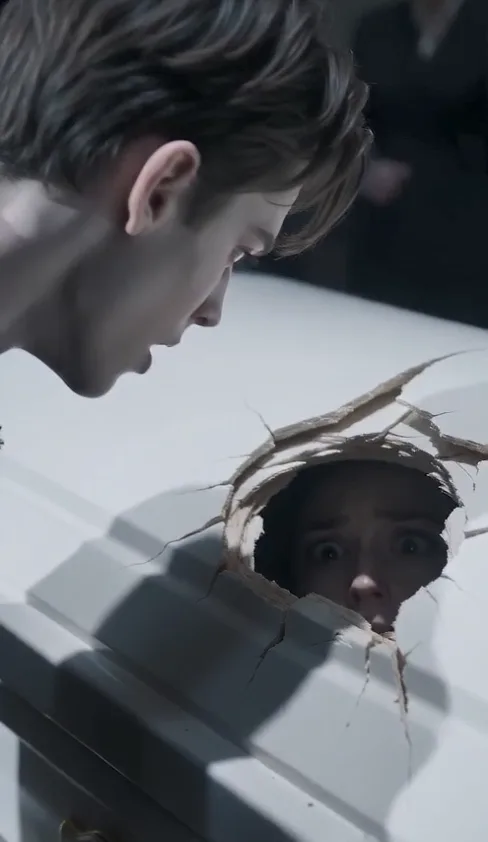


He divided the food evenly.
And for the first time, neither child saved anything for later.